
Have you ever fallen in love with something so unexpectedly? That feeling when you try something new and immediately think to yourself, “I want to do this forever!” That was me the first time I ever wrote copy for a new product package. It took me a few attempts, and tons of research on how to properly list ingredients, and how to use the packaging space effectively. Once I got the process down, I was hooked. Why is it so important to have a strong packaging copy? Effective packaging copy is crucial for attracting customers, communicating value, and driving sales.
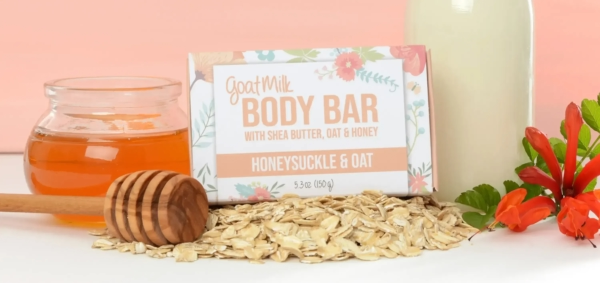
Effective Packaging Copy Increases Sales
To write great packaging copy you need to understand your audience, prioritize information, create compelling headlines, be concise with language, use call to actions, have a strong design and readability, and most importantly understand and apply legal and regulatory requirements.
Here’s a breakdown of each component:
1. Understand Your Audience and Product
Before writing, clearly define:
- Target Audience: Who are you trying to reach? What are their needs, desires, and pain points?
- Product’s Unique Selling Proposition (USP): What makes your product different and better than the competition?
- Key Benefits: What problems does your product solve, and how does it improve the customer’s life? Focus on benefits, not just features.
- Brand Voice: Is your brand playful, serious, luxurious, eco-friendly? The tone of your copy should align with your brand’s overall personality.
2. Prioritize Information
Packaging space is limited, so prioritize what’s most important:
- Front Panel (Prime Real Estate):
- Product Name: Clear and memorable.
- Brand Logo: Easily recognizable.
- Key Benefit/USP: A short, impactful statement that grabs attention and highlights the core value.
- Net Weight/Volume: Essential for many products.
- Visuals: High-quality imagery of the product or its use.
- Side/Back Panels:
- Detailed Benefits: Expand on the core benefits, providing more context.
- Features: List key ingredients, materials, or functionalities.
- How to Use/Instructions: Clear, concise steps if applicable.
- Ingredients/Nutritional Information: Mandatory for food and cosmetic products.
- Origin/Made In: Important for certain consumer segments.
- Certifications/Awards: Build trust and credibility.
- Company Contact Information: Website, social media handles, customer service details.
- Barcode/SKU: Essential for retail.
- Recycling Information: Increasingly important for environmentally conscious consumers.
3. Craft Compelling Headlines and Slogans
- Headlines: Should be attention-grabbing and communicate a primary benefit or the product’s essence immediately.
- Example (Coffee): “Awaken Your Senses,” “The Perfect Start to Your Day”
- Slogans: Short, memorable phrases that encapsulate your brand or product’s promise.
- Example (Snack Bar): “Fuel Your Adventures,” “Healthy Energy, Delicious Taste”
4. Use Clear, Concise, and Benefit-Oriented Language
- Avoid Jargon: Speak in plain language that your target audience understands.
- Focus on Benefits: Instead of saying “contains Vitamin C,” say “Boosts your immune system.”
- Be Concise: Every word counts. Eliminate unnecessary adjectives or adverbs.
- Use Action Verbs: Make your copy dynamic and engaging.
- Maintain a Consistent Tone: Ensure the language reflects your brand voice throughout.
5. Include a Clear Call to Action (CTA)
While not always explicit on packaging, the overall goal is to prompt a purchase. For some products, a subtle CTA might be:
- “Experience the difference.”
- “Treat yourself.”
- “Discover more at [website].”
6. Consider Legal and Regulatory Requirements
- Mandatory Information: Ensure you include all legally required information for your product category (e.g., ingredients, allergens, warnings, nutritional facts, country of origin).
- Claims Substantiation: Any claims made about your product (e.g., “all-natural,” “organic,” “gluten-free”) must be accurate and verifiable.
7. Design and Readability
- Font Choice: Legible fonts are crucial. Consider size, style, and contrast.
- Layout: Organize information logically with a clear hierarchy. Use headings, bullet points, and white space to improve readability.
- Color Palette: Colors evoke emotions and can reinforce your brand message.
- Integration with Design: The copy and design should work together seamlessly to create a cohesive and appealing package.
8. Test and Refine
- Read Aloud: This helps catch awkward phrasing or errors.
- Get Feedback: Ask others to read the copy and provide their impressions.
- A/B Testing (if possible): For digital packaging or early stages, test different copy variations to see what resonates best with consumers.
By following these principles, you can create packaging copy that not only informs but also persuades and connects with your customers, ultimately leading to increased sales and brand loyalty.
 Creative Stories Media
https://creativestoriesmedia.com/wp-content/uploads/2025/09/videography-029-1.jpg
1080
1920
Rachel Bollin
https://creativestoriesmedia.com/wp-content/uploads/2025/07/creative-storeis-media-header-logo-2025.png
Rachel Bollin2025-09-24 16:23:542025-09-24 16:23:54Telling the Brand Story
Creative Stories Media
https://creativestoriesmedia.com/wp-content/uploads/2025/09/videography-029-1.jpg
1080
1920
Rachel Bollin
https://creativestoriesmedia.com/wp-content/uploads/2025/07/creative-storeis-media-header-logo-2025.png
Rachel Bollin2025-09-24 16:23:542025-09-24 16:23:54Telling the Brand Story Creative Stories Media
https://creativestoriesmedia.com/wp-content/uploads/2025/07/07-28-25_logo_annc_06.png
1250
1000
Rachel Bollin
https://creativestoriesmedia.com/wp-content/uploads/2025/07/creative-storeis-media-header-logo-2025.png
Rachel Bollin2025-08-19 18:41:032025-09-04 08:29:23Overcoming Obstacles in Business
Creative Stories Media
https://creativestoriesmedia.com/wp-content/uploads/2025/07/07-28-25_logo_annc_06.png
1250
1000
Rachel Bollin
https://creativestoriesmedia.com/wp-content/uploads/2025/07/creative-storeis-media-header-logo-2025.png
Rachel Bollin2025-08-19 18:41:032025-09-04 08:29:23Overcoming Obstacles in Business https://creativestoriesmedia.com/wp-content/uploads/2025/05/brooke-nora-laundry-products-011.avif
972
729
Rachel Bollin
https://creativestoriesmedia.com/wp-content/uploads/2025/07/creative-storeis-media-header-logo-2025.png
Rachel Bollin2025-07-21 02:34:542025-07-31 16:27:29Print Marketing Materials Remain Valuable
https://creativestoriesmedia.com/wp-content/uploads/2025/05/brooke-nora-laundry-products-011.avif
972
729
Rachel Bollin
https://creativestoriesmedia.com/wp-content/uploads/2025/07/creative-storeis-media-header-logo-2025.png
Rachel Bollin2025-07-21 02:34:542025-07-31 16:27:29Print Marketing Materials Remain Valuable
